
NetSec Platform: Introduction (Start Here)
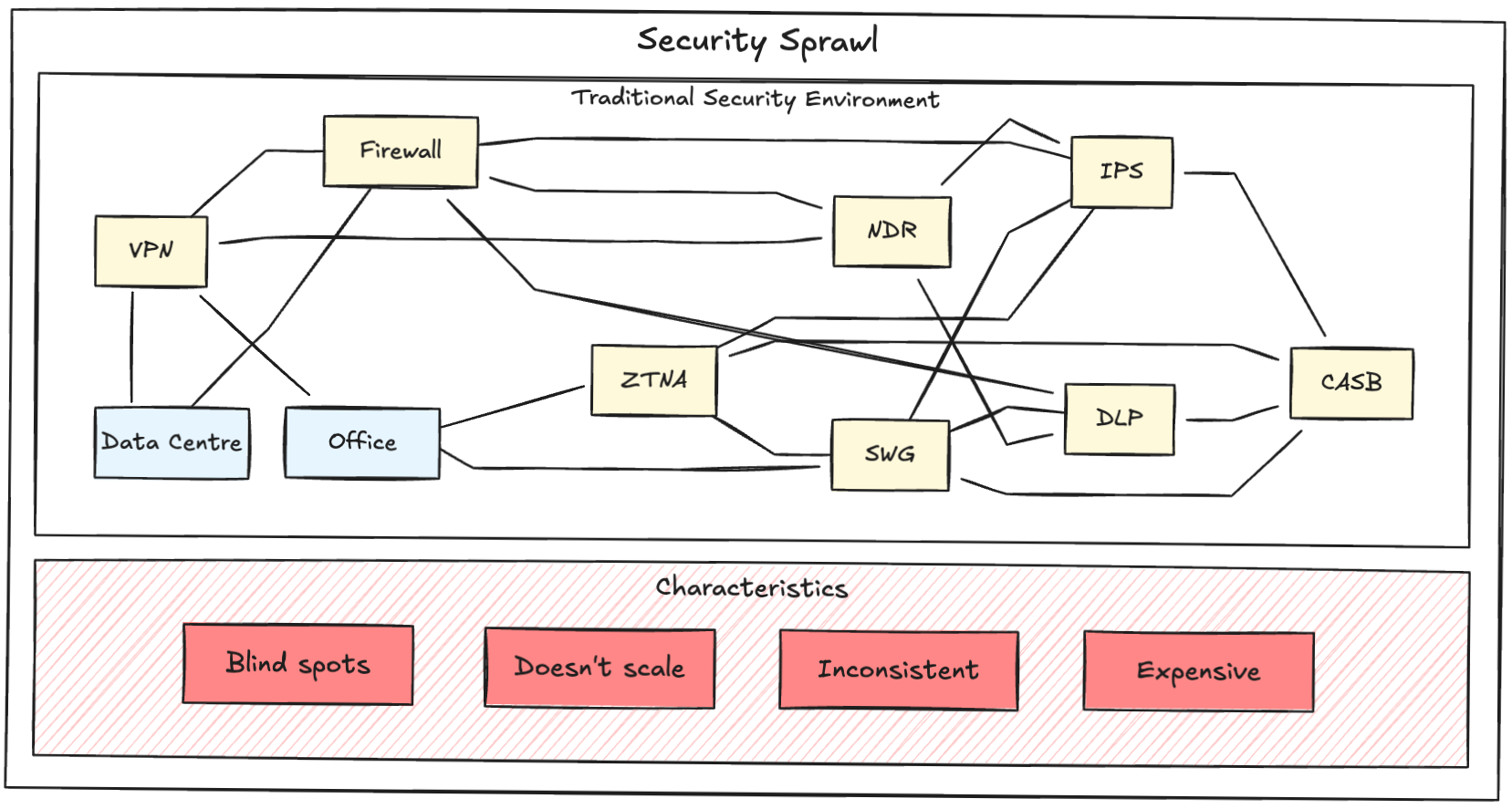
The majority of organisations I have worked with can put network security into 1 of 2 categories. They have a visibility problem, or they have a scale problem. Some have both.
As workflows and systems have become digital most organisations have had organic growth in their software usage and supporting infrastructure. While lines of business are trying to get ahead with emerging technologies, IT is still mopping up to secure the last innovation initiative. This leads to several challenges:
Visibility:
"I'm pulling in logs from all my data sources. I have 5000 alerts a day and I don't know what to prioritise."
"I have different point tools but no joined up view of my environment. I don't know where the gaps are"
"My business departments are using their own tools. I don't know if they're secure or where our company data is going.
Scale:
"Our users in different locations have different experiences. We have security policy sprawl across static enforcement points."
"Our team is constantly fire-fighting. We're using different tools because our needs changed and we had to respond quickly to solve urgent issues."
"We used to secure offices and data centres. Now people want to work from anywhere and connect their cloud or AI apps to our company data."
These challenges increase the risk of data loss or theft, service compromise or outage, reputational damage, and financial impact.
What is a NetSec Platform?
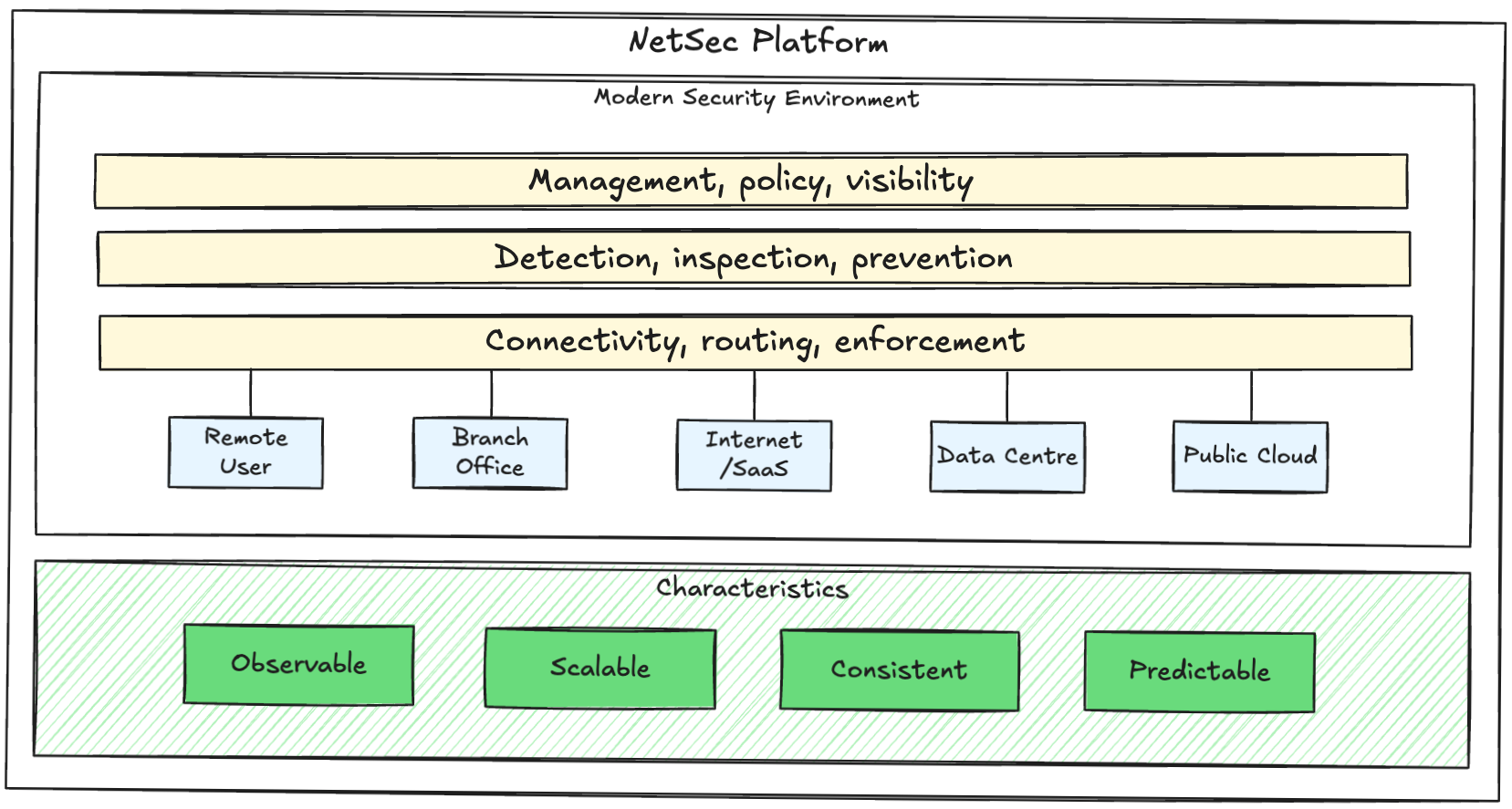
A Network Security (NetSec) platform is the foundation for secure connectivity and consistent controls across a network. It's a deliberate system that's designed to be consistent, observable, and scalable.
In practical terms, a NetSec platform:
Provides centralised control with distributed enforcement and consistent policy across users, sites, clouds, and apps. Deployments are repeatable and automated to reduce manual effort and inconsistencies.
Solves the problem of both too much and too little visibility by correlating logs and telemetry into one data model, providing usable and proactive output.
Is cloud-native and scales with the business, allowing departments to safely adopt emerging technologies using existing guardrails and data protection.
A NetSec platform is not:
- A collection of tools that integrate
- A firewall in the cloud
- A SOC (Security Operations Centre) replacement
- A network redesign (though it may influence one)
- A one-time project (it's an operational capability)
Why is a NetSec Platform Important?
Network security has traditionally been purchased as a set of products. That model worked when traffic stayed inside the corporate perimeter, but today it's difficult, expensive, and ineffective.
A platform approach matters because it overcomes the challenges outlined above and directly impacts outcomes most organisations care about:
- Operational resilience
- Risk reduction through consistency
- Faster delivery of business change
- Lower operational overhead
- Better auditability and governance
Ultimately, it improves user experience by design. This means better performance and reliability, fewer 'random blocks', and faster access to the tools people need. Indirectly leading to better customer outcomes.
Operational Outcomes
If you've successfully implemented a NetSec platform you'll notice a few things:
- Security changes are predictable
- Policies are understandable
- Troubleshooting is fast and effective
- Deployments are repeatable and automated
- Digital teams collaborate
- Users experience fewer unexplained access issuess
What's Next?
Now that we've set the terminology, we can go deeper into the platform building blocks.